Gettysburg
With the weekend out of the way, it was time to get back to the job on hand. I had always had the intention of visiting the site of the Battle of Gettysburg, which many consider to be the turning point in the American Civil War.
After some earlier successes, the Confederate Army under General Robert E. Lee was advancing northwards with the intention of winning a major victory north of the Mason-Dixon line and swiftly ending the war. The Union Army was manoeuvring to stop him. Neither side planned a battle at Gettysburg, but an advance unit of the Unionists spotted the Confederate scouts near McConnellsburg, Fulton Co, fired a shot and, killing one man, started the battle of Gettysburg.
It lasted for three days from 1-3 July 1863, and, at the end, the Union Army was victorious, but at a cost of 23,049 killed, wounded or missing-in-action; the Southern casualties amounted to 28,063 on the Northern side.
Because the Union general Meade did not pursue the retreating Confedrates and force their surrender, they escaped and the war dragged on for another two years. In November, at a ceremony to honour the fallen and dedicate a cemetery, Abraham Lincoln delivered the now famous Gettysburg address.
The visit was definitely worthwhile and the The National Museum at Gettysburg is state of the art, if a real tourist trap. There is a film about the battle on a large, curved screen and a large painting, called the Cyclorama. Recently restored to its original glory, the cyclorama is 377 feet long and 42 feet high. The painting was done by French artist, Paul Phillipoteaux, over a period of a year, and after many months on the actual battlefield, researching with a team of veterans and a photographer. It is the central item in an impressive light and sound show that attempts to re-create the battle.
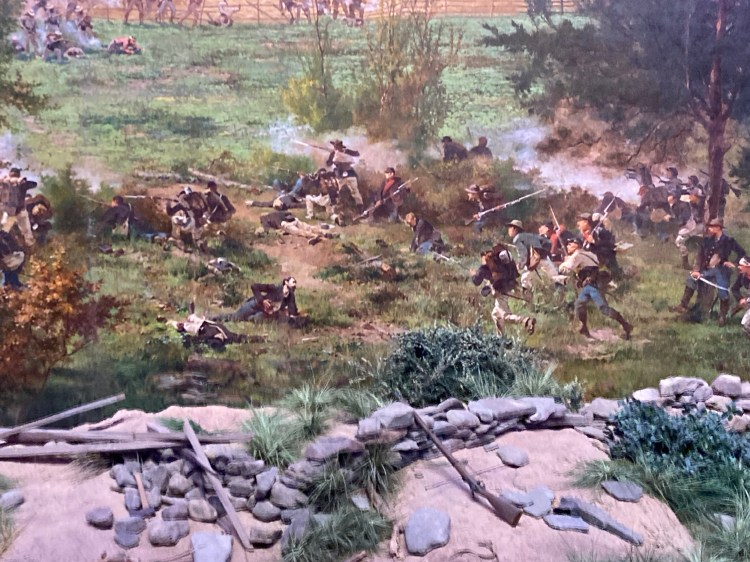
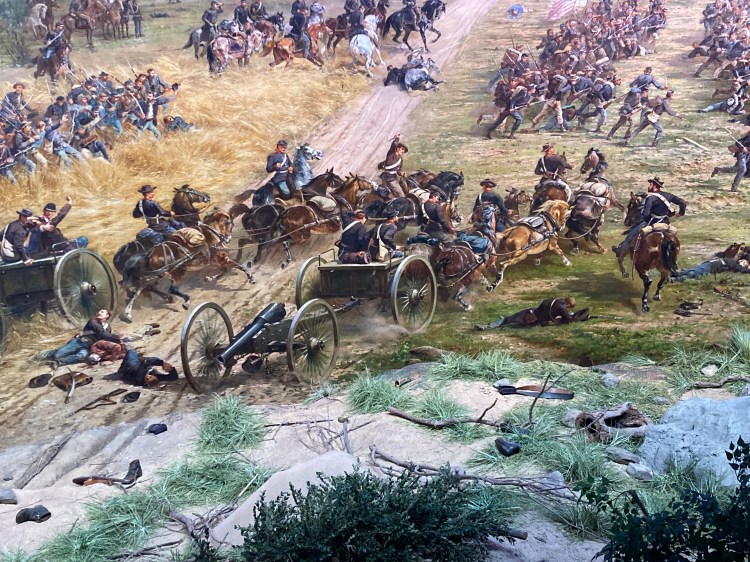
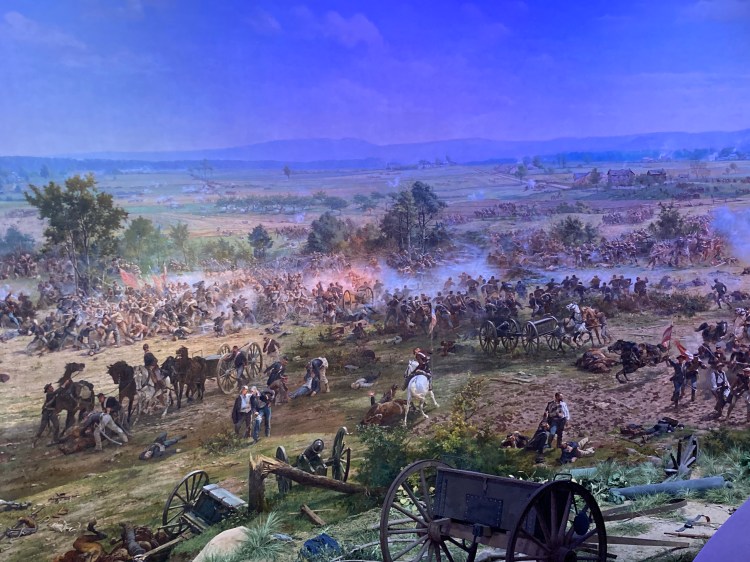
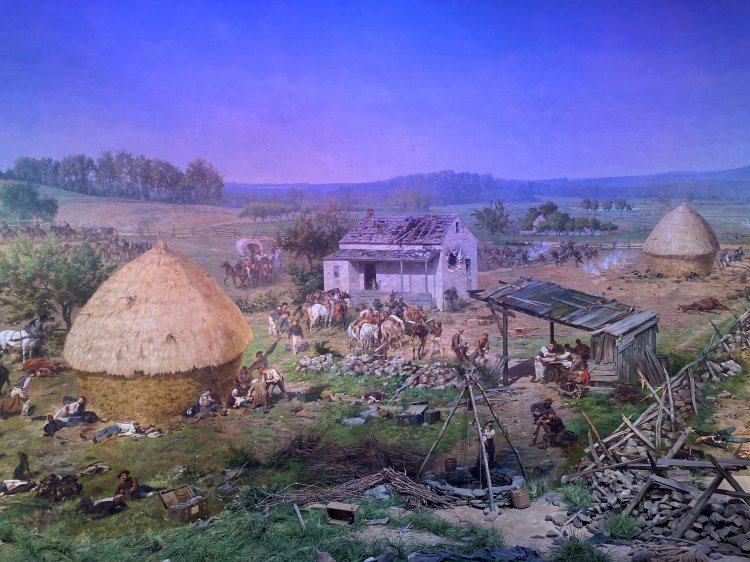
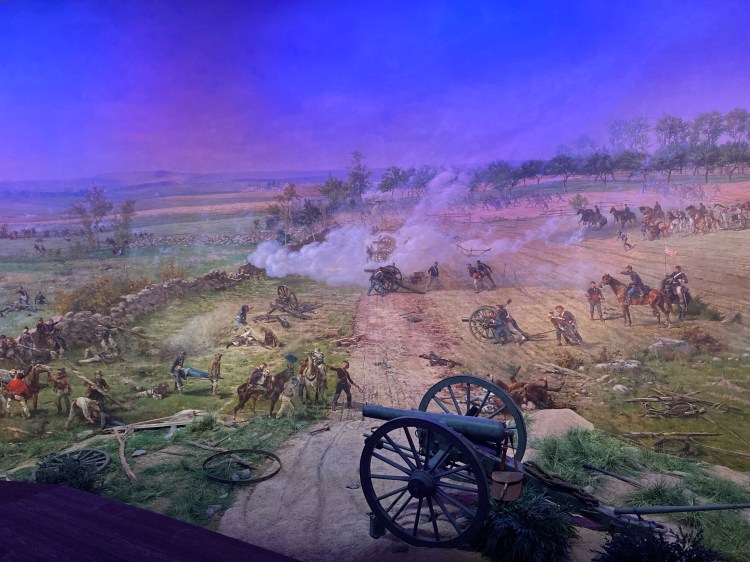
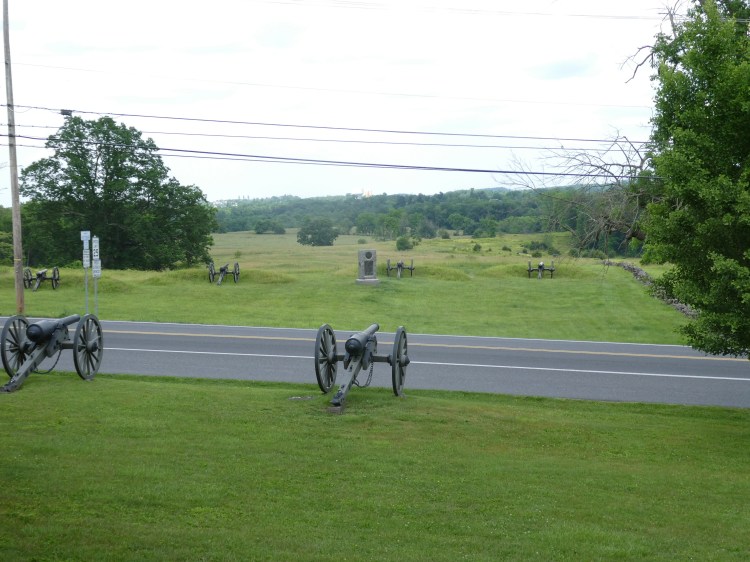
The physical field is also worth a visit as from where we viewed it, Cemetery Ridge, one cannot but wonder and the sheer courage, commitment and determination of the attacking army as it advanced uphill, over open ground towards well defended positions bristling with infantry positions and rows of cannon. And consequently, of course, there’s the cemetery.
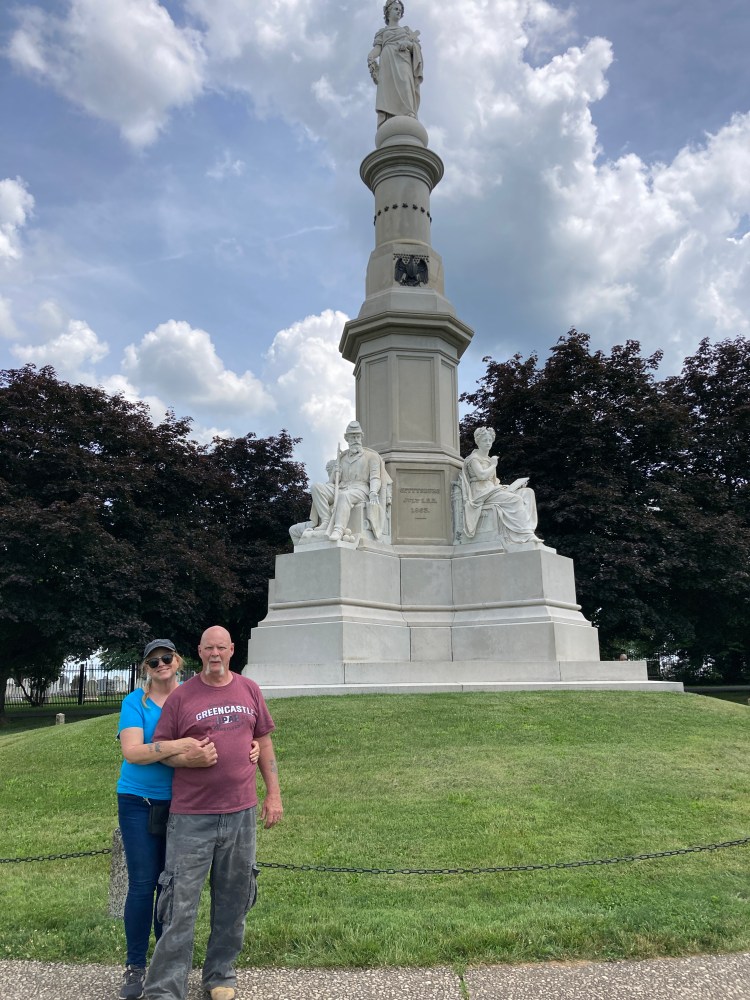
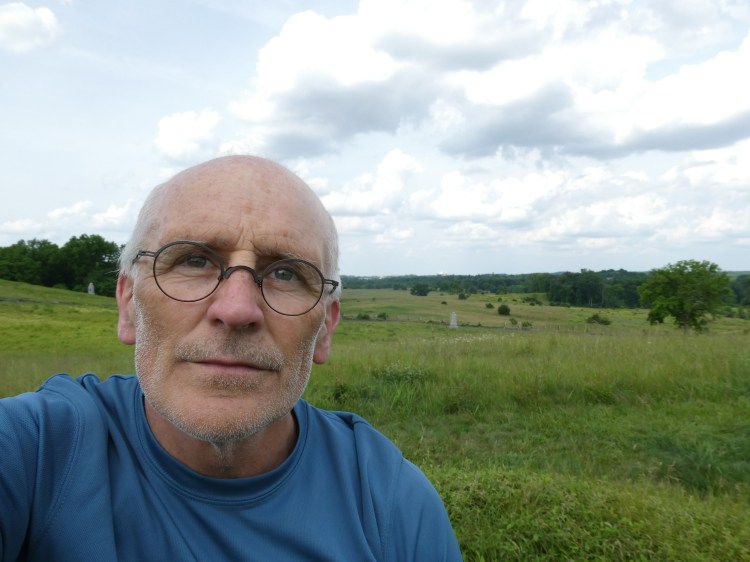
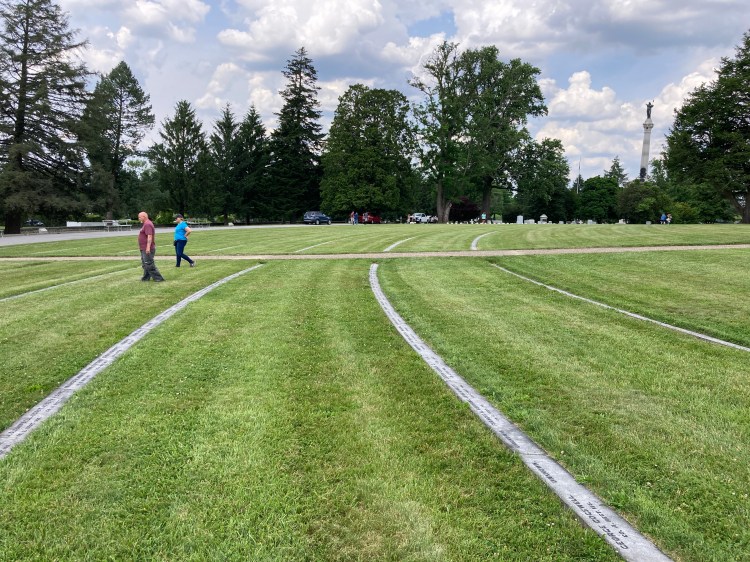
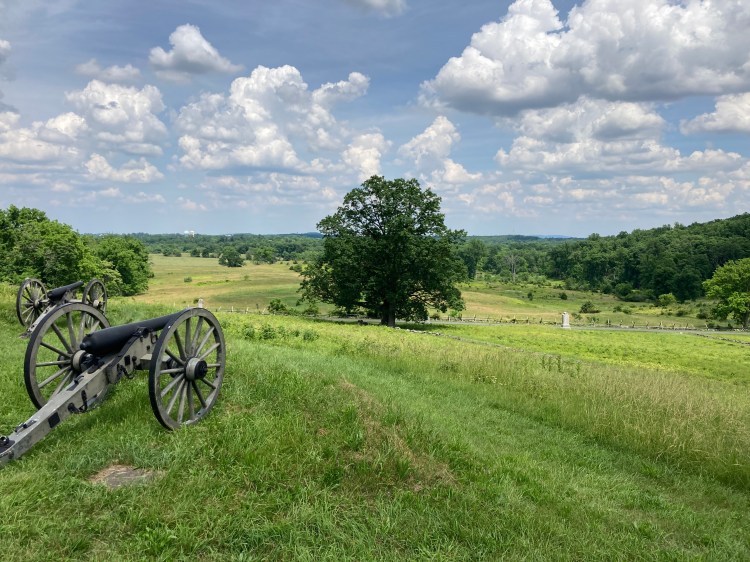
No good war is without an Irish input, somehow, and the Civil War was no exception. The Irish Brigade was famed for its spirit and effectiveness as a fighting force and took pat in many of the crucial battles.
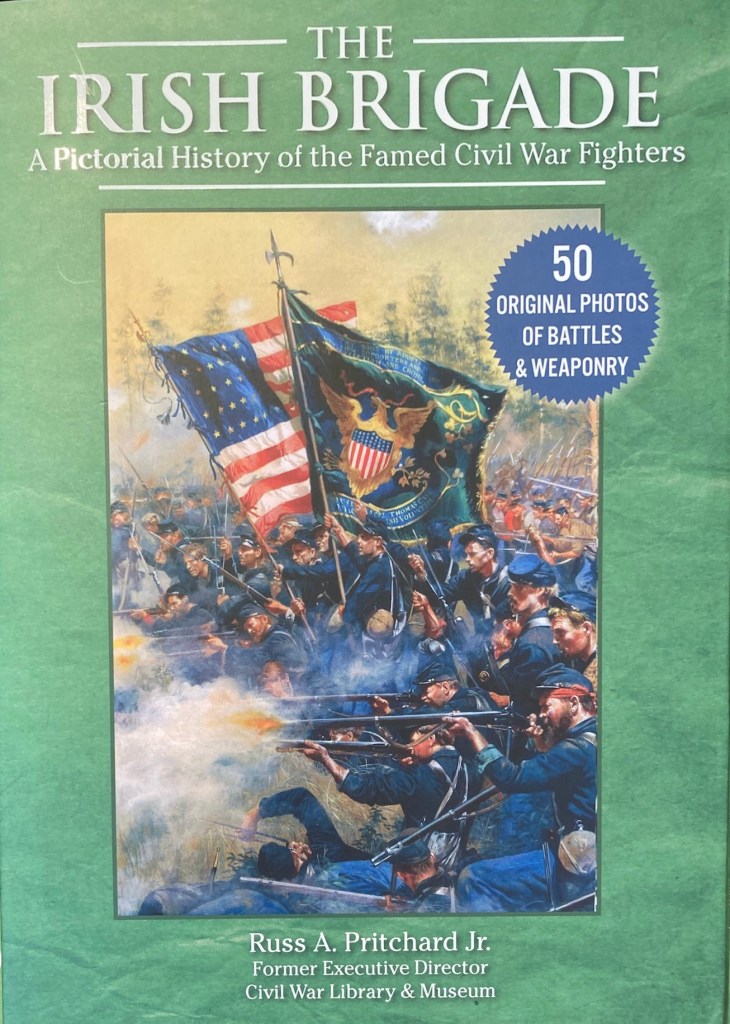
One thought that occurred to me was the failure of later generals to learn from the experience of the confederates; 50 years later, on the fields of Flanders and France, blimpish generals would similarly send waves of soldiers out of their trenches to attack, over open ground, positions heavily defended with much improved weaponry. The main difference was that the toll was much greater.
Belfast, Fulton County, PA
On a morning threatening rain, I left Greencastle and headed along Route 16 towards Fulton County. It was warm, even at nine in the morning. No-one had told me however about the mountain between me and my destination and before long I was climbing into the low clouds that I had been observing since hitting the road. They weren’t big, so the cold spell was brief and soon I was entering a town called McConnellsburg. Here I spotted the Fulton County Historical Society Museum, which, as per usual, was closed. However this was due to the early hour, I thought, as no other shop on Main Street was open either.
Planning to visit on my return trip, I headed on and was soon approaching Needmore, “the Township Town”. I turned off R16, an A road, onto R3015, a C road and finally onto Beatty Road which, after I crossed a small bridge became a gravel road. A few hundred metres later the GPS informed me that I had arrived. I was in Belfast, on a gravel track in the middle of a forest; not a paved road, a house, or even a town sign in sight.
Belfast in Fulton County is a township, the southern border of which lies along the Mason-Dixon line dividing Pennsylvania from Maryland. The area was officially settled in 1754 and was known as Cumberland County. Before this, however, the Scots-Irish had already occupied the area and named it after Belfast, N Ireland.
In 1850, Fulton County was created by a division of Cumberland. As noted, Belfast Township was already in existence at this time, and reflecting the wider Scots-Irish influences, lay alongside townships called Ayr and Dublin in Fulton, and, in neighbouring counties, Lurgan and Letterkenny. For administrative reasons, Belfast too was divided into smaller areas to its current size.
As noted above, it was in Fulton Co that the first shot of the Battle of Gettysburg was fired; it was also the location for the last confederate bivouac before they finally retreated over the Mason-Dixon Line.
Nowadays, Belfast is very much a rural farming area, with the cultivated parts very clearly carved out of the original dense mixed woodland. Whilst it may be hard, farming here is, judging by the houses, some of which are evidently quite old, a financially rewarding activity.
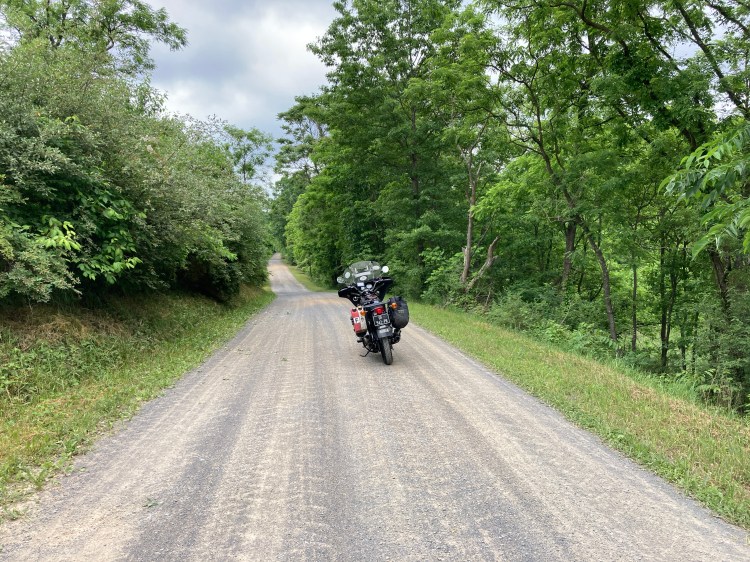
After a short stay to take in the atmosphere I turned to leave and as I did so a vehicle approached and slowed to let me pass. I stopped to meet an old gentleman who greeted me warmly. After the introductions, I asked him about the name, Belfast. “I have no idea,” he replied, “but I do have a book about all the one-rooms schools in the county, if you’d like to see that.” “Absolutely, I would,” I replied, so ten minutes later we were outside his house at the top of the hill on Dusty Lane.
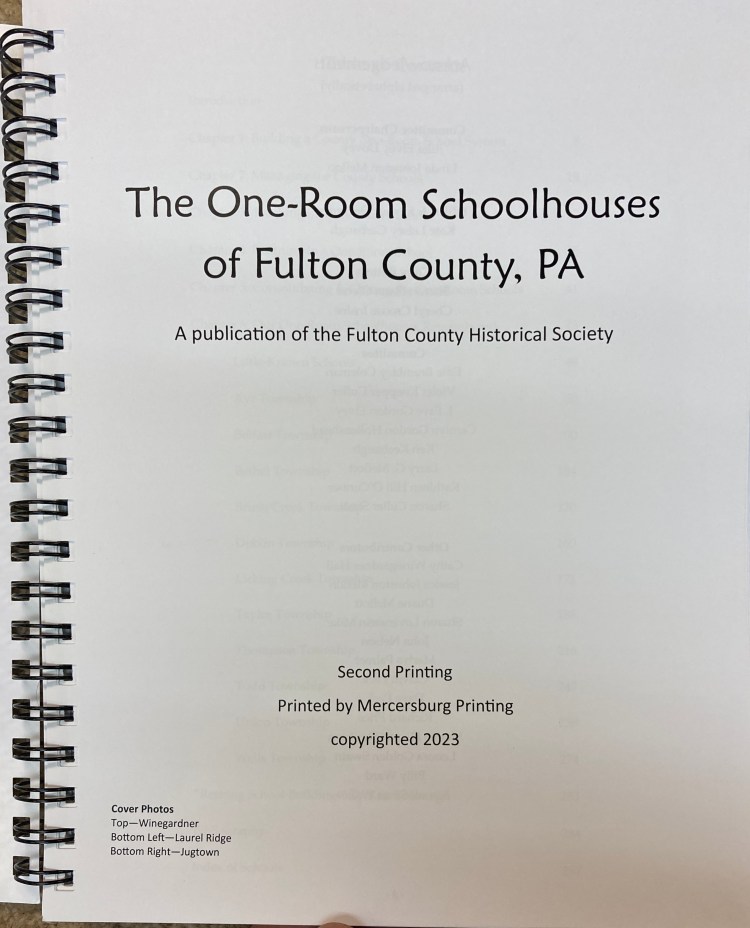
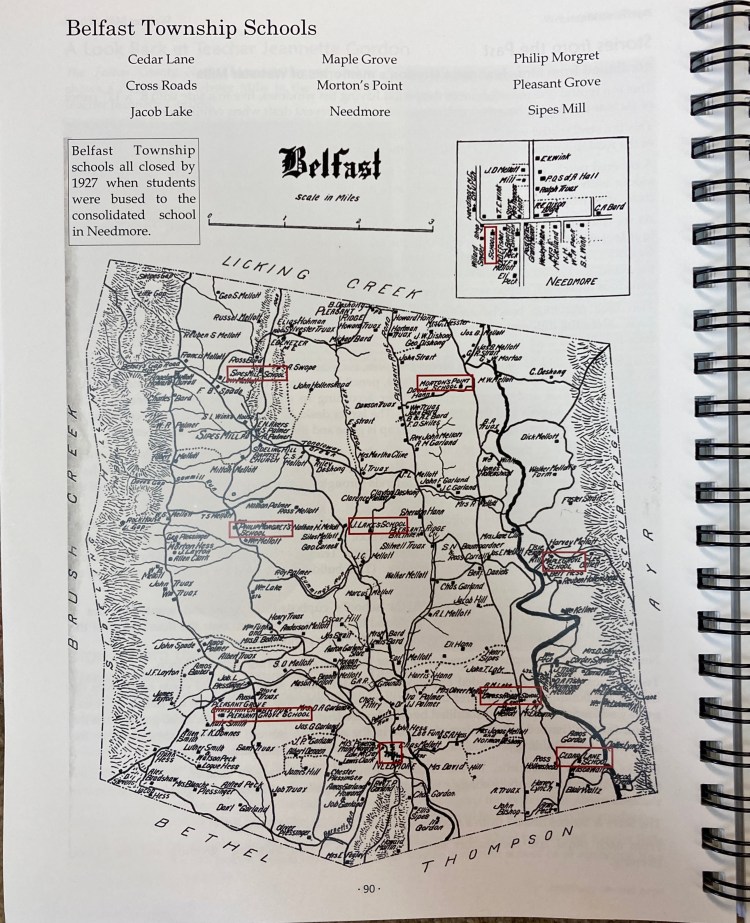
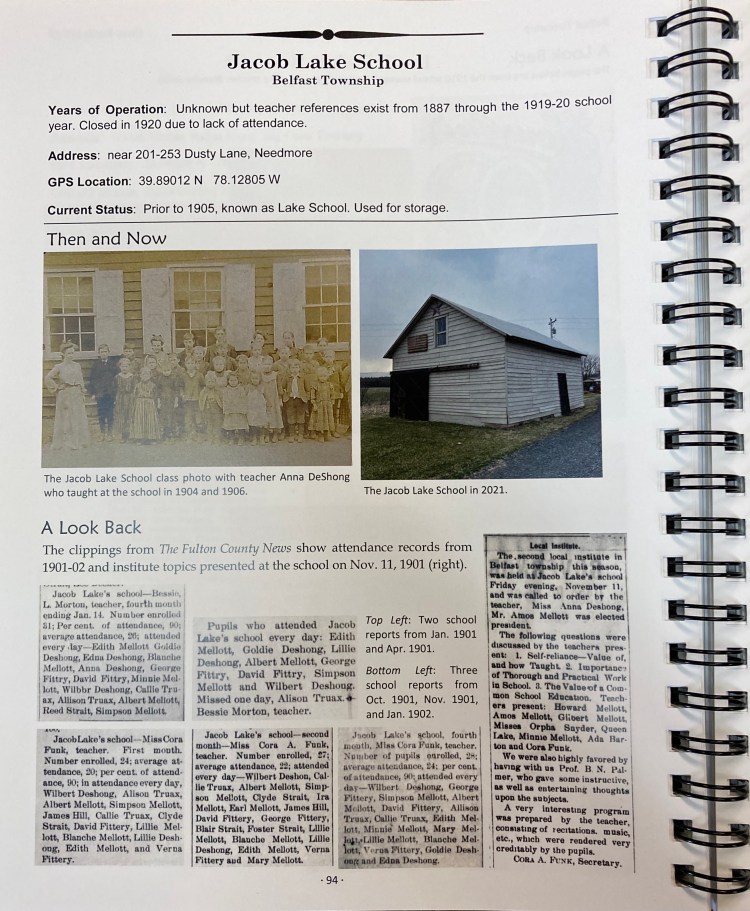
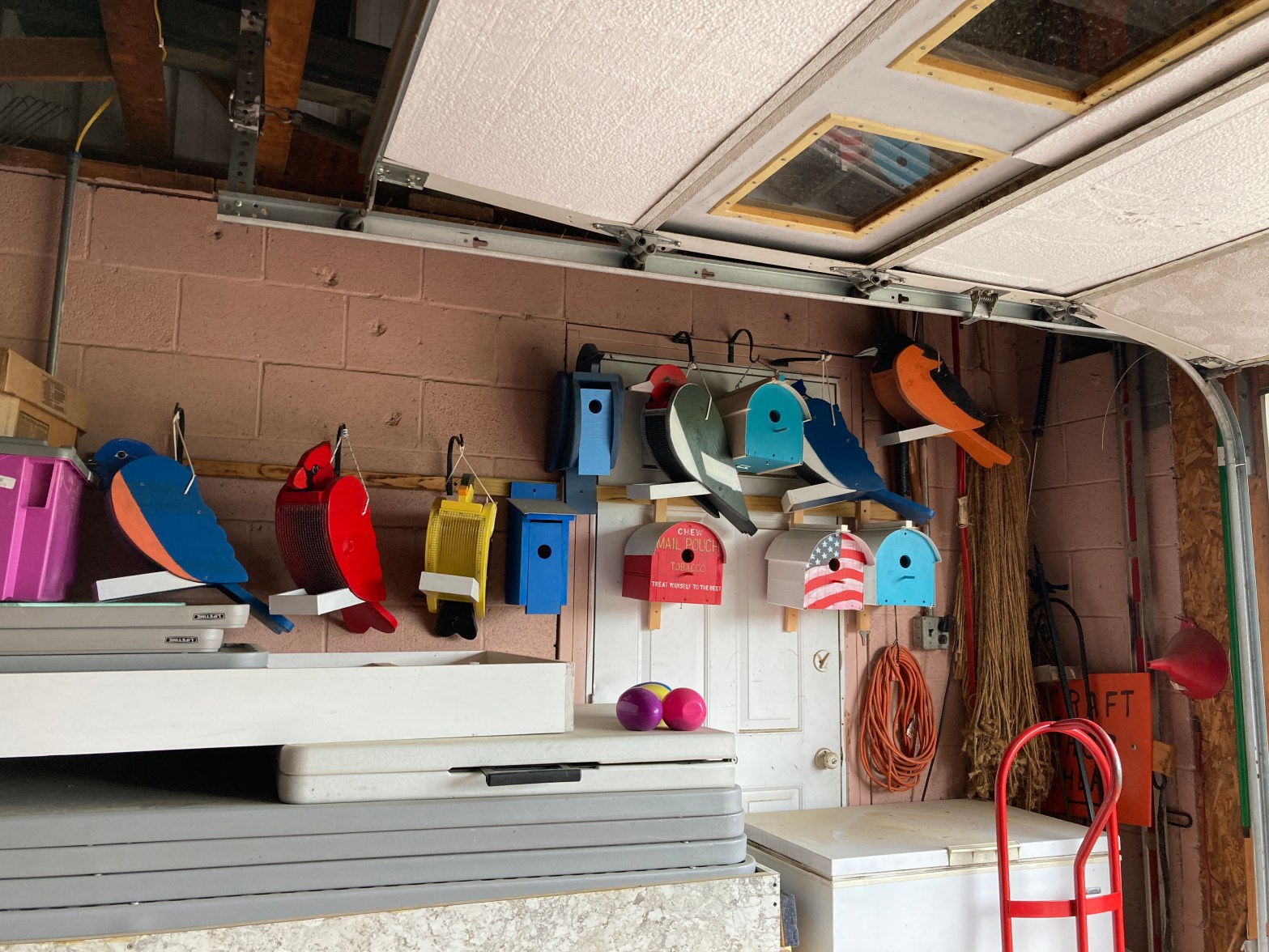
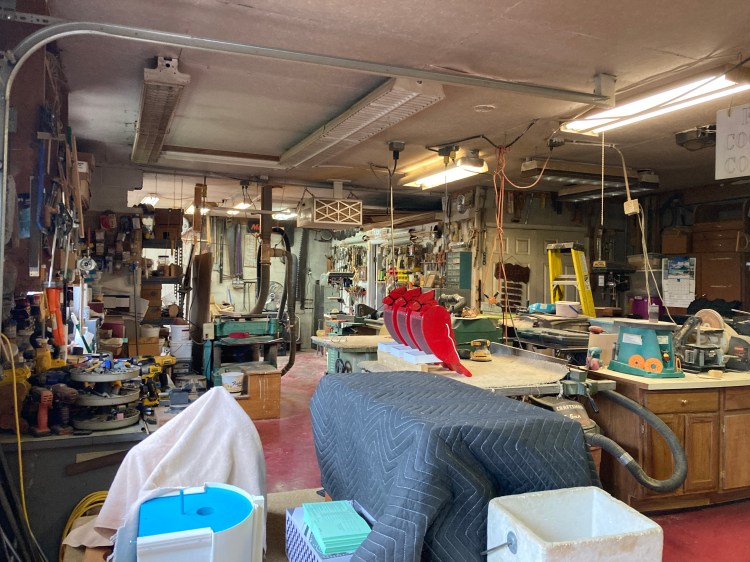
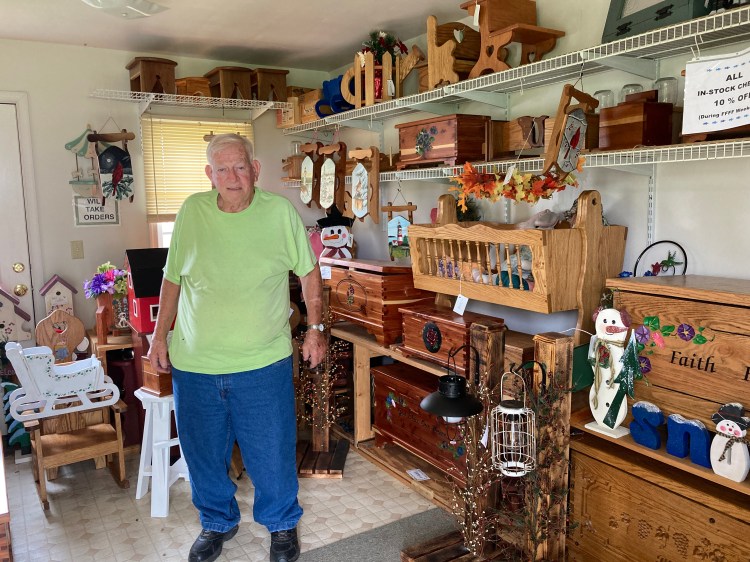
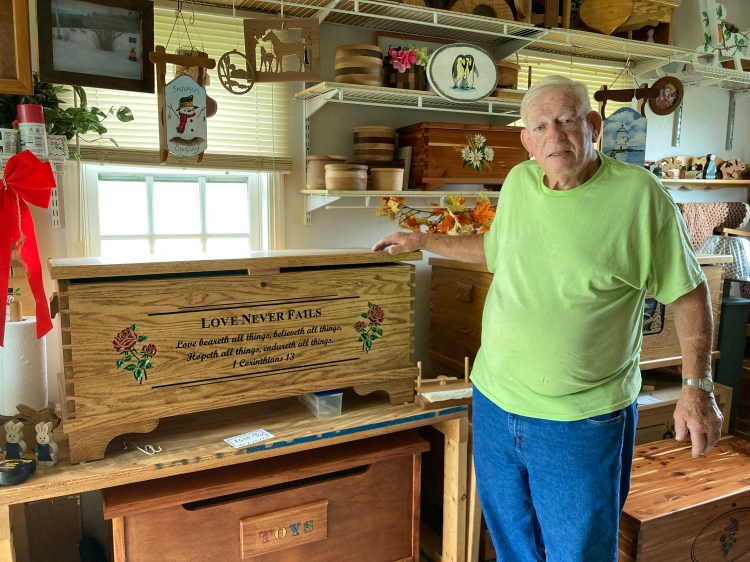
This gentleman was called Donald Snyder and he had lived in the area all his life. A machinist by trade, he now spends his time on woodworking and cutting grass around his home and the local Church, where he also does some maintenance work. He showed me into his workshop and went off on his golf cart to fetch the book.
His woodwork ranges from the exquisite pieces of furniture to quixotic craft pieces, but all exhibiting a remarkable degree of workmanship. He does the woodwork and has someone else do the carving on he pieces, and his son-in-law then does the painting. Some of these he sells, and others he donates to good causes. I spent a most enjoyable half-hour listening to his stories, mostly about his family, bit also a little about his own life. Having spent 35 years working in the same factory, he was now retired and keeping himself fully occupied so that when his time came, he would fall straight into his grave, dependent on and a burden to no-one! A fine philosophy, I agreed with him.
Taking my leave, I headed back to McConnellsburg and the Fulton County Historical Society. As I arrived outside the office, two ladies were wrestling with an advertising sail – you know, one of those mini-windsurfer things – announcing that the Museum was open.
When I asked them if they were from the Museum – a rather unnecessary question – they replied that they were, but it was not open today. Thirty seconds later I was being shown inside and Cheryl was on the phone to Tom Duffy, who she said was a much more knowledgeable volunteer that she.
Tom arrived a short while later, having interrupted his gardening and a fight with a “black snake”. This I learned is the Eastern Black Ratsnake, a constrictor that can grow to 2,5 metres (or 8,5 ft)!
He started by telling me that his family was from Ulster and that he had visited there a few years earlier. Speaking to someone in Derry, he was informed that the Innishowen Peninsula in Donegal was “full of Duffys”. He then said he had stayed in Belfast for a few days and when I asked where, he said, “I stayed with a family in a place called Newtownabbey!” “No way!” was my response, “I grew up in Newtownabbey!” He tried to describe exactly where he had stayed, but we got no closer than that he came off the highway (M2 or M5 it must have been) close to a very nice garden.
Anyway, his family had lived in the the Fulton County area since the beginning and his grandfather and great-grandfather had operated a mill, first known as Duffy’s and later, when his grandfather decided to change the family name, as Duffey’s.
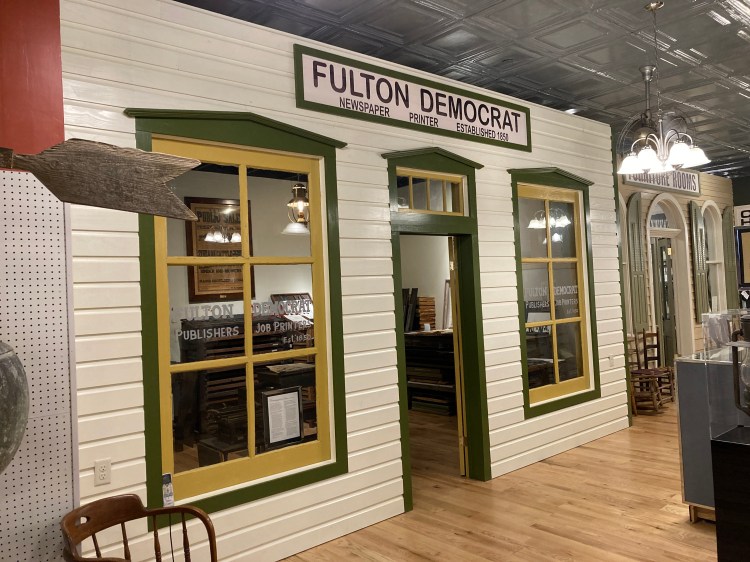
I was then treated to a fascinating and very well-informed tour of the museum, which essentially attempted, really very successfully, to recreate many of the stores and businesses from, as early as, 18th and 19th century Main Street, McConnellsburg.
Nearly all the items making up the exhibits or on display therein were original, having been donated by local residents and businesses. Some examples were the first Chevrolet to be sold in the town after WW II in pristine condition; a reconstruction of the general store and post office; the office, with original furniture, of the President of the town’s first bank; the first District Judge’s chair, alongside a homemade witness’s chair and stand. Having take one photo before Tom arrived, his narrative was so interesting, I forgot to take others: sorry!
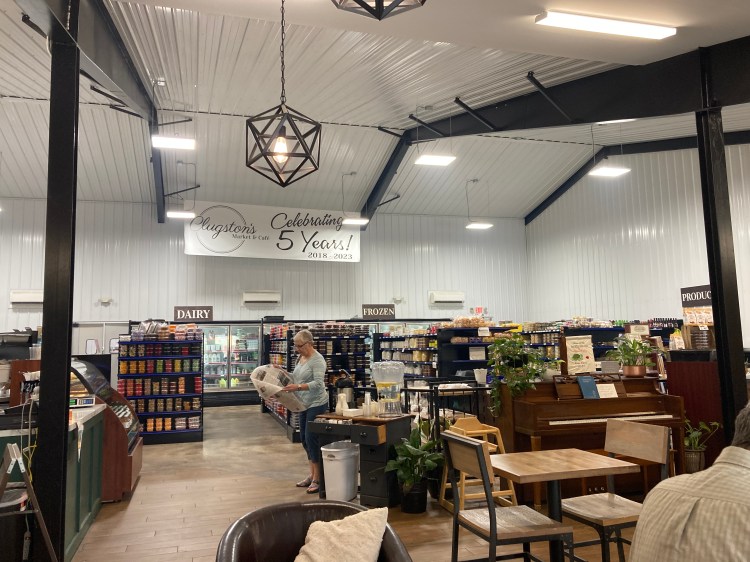
Having had, what I would rate as, a very successful day, there was one more treat in store before I left Fulton County. I asked at the Museum where I could get a coffee before heading home and was directed towards Clugston’s Market and Café. I wasn’t disappointed and left well refreshed.
As we walked through the museum, I had been struck by the number of items that had been passed down and carefully preserved by families, for many generations. This reinforced my impression that the people I had met and was meeting in these rural areas were firmly attached to their roots. Families live and die in place; names that appeared on 1870’s maps are still visible on store fronts and farm gates throughout the area. People are simple, honest and straightforward, have a strong sense of their community and are proud of their history.
Another thing I reflected on was that alongside the Irish and English, there was evidently strong French and German/Dutch influences in the early days, judging by the number of towns with names ending in “-ville” and “-burg”.
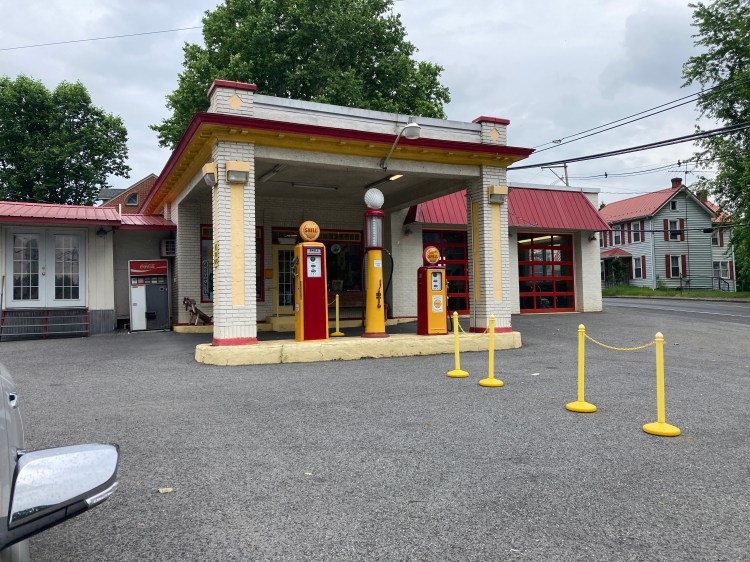
The journey home provided another example of the desire to preserve America’s early and more recent history; a gas station straight out of the 1950’s at a road junction in Mercersburg.
Back “home” at Barr Road, I had to sort myself out for the next stage of my trip. This was a revised schedule that would take me to the two of the three Belfast’s in Ohio, then back here to Greencastle, before turning southwards to the Virginia and the Carolina’s, rather than the other way round.
 Belfast-2-Belfast-By-Bike