Tuesday 23rd April
From Harve-Boucher, I took the road towards Monastery. Five minutes out, I realised I had forgotten my specs again, so I surprised and amused Simon when I returned ; I really must come up with a system to avoid doing this every morning.
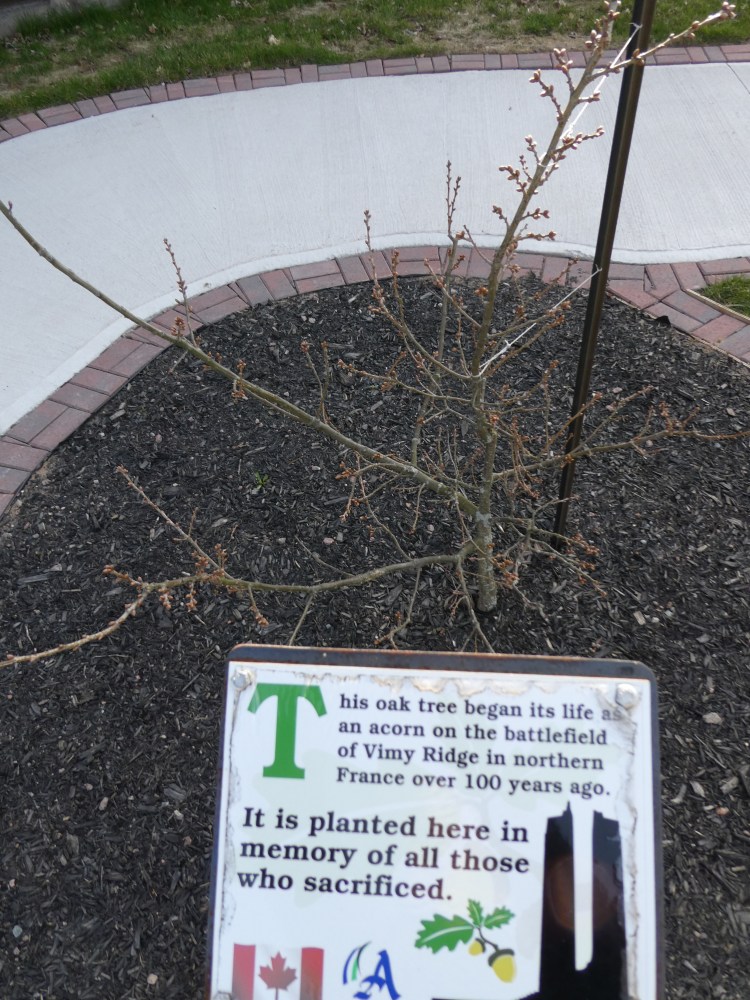
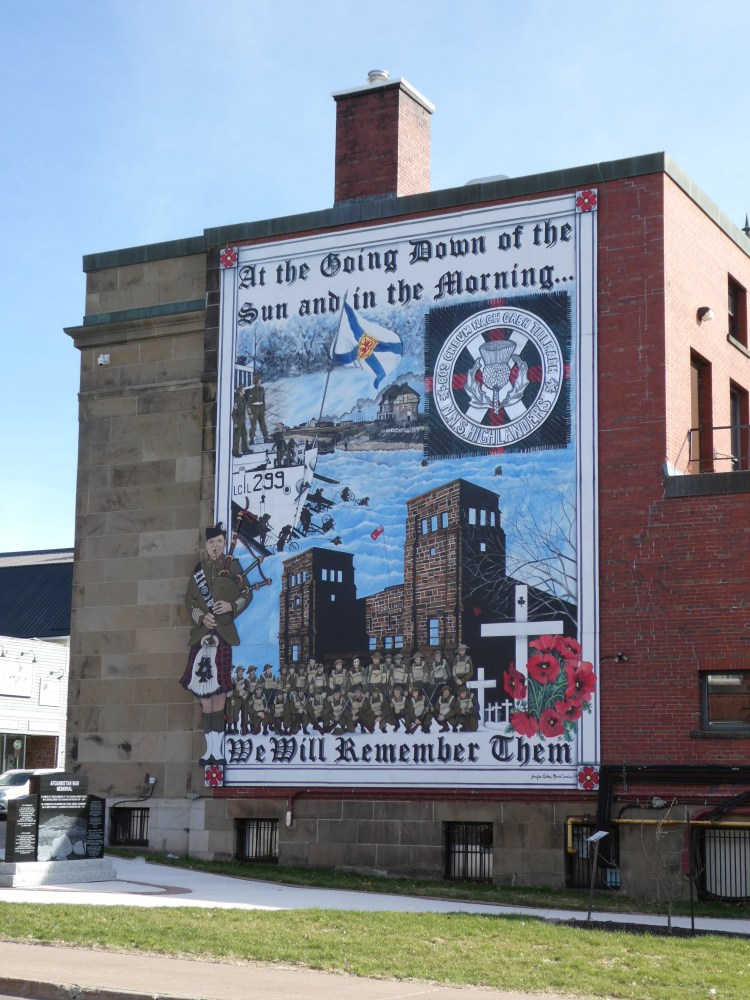
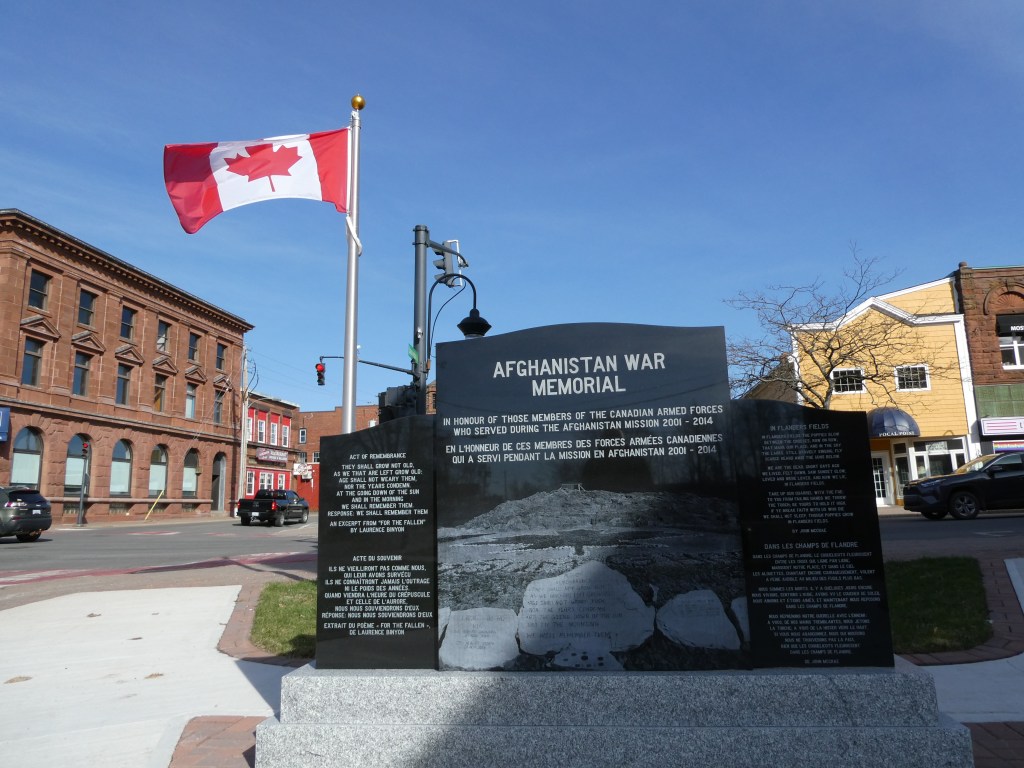
Rather than try to make PEI in one cold day, I had decided to stop in a town called Amherst. I arrived with the usual stop for coffee mid-afternoon. This was when I discovered that the lodging I had booked was in a different town, another 50km, and in the wrong direction! That is the problem with AirBnB ; you put in a town and you get places in a variable radius of that town. My fault I guess ; will have to stay awake when booking in future. In Amherst they take Remembrance seriously!
Luckily I got a partial refund on the non-refundable booking and was able to find another place in the middle of Amherst – the wonderfully named “Healing Touch Holistic Living Space”. This was run by a pleasant guy from Sri Lanka, who, next morning on his way to court was weraring the most highly polished winle-picker shoes you’ll ever see. J
I had breakfast in another wonderfully named establishment “Art of Eating Deli” ; a very tasty egg and bacon roll and a chat with a homeless guy wearing a cute pink baseball cap, advertising, he said, a local cap factory. He said a lot of other things too mind, including claiming to have a Masters degree so, as is often the case, it is difficult to determine what is fact and what fiction. Still he was pleasant enough and enjoyed his egg roll and coffee given to him by the deli owner.
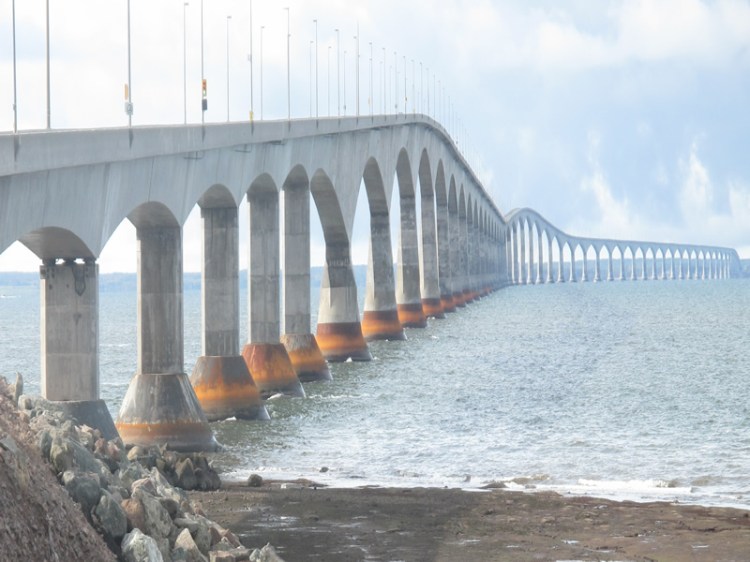
I set off for and, with very little to say about the route, arrived on Prince Edward Island about 1 ½ hours later. The impressive bridge joining Prince Edward to the mainland opened in 1997 ; it is 13km long, and climbs to two peaks during its length. I was told this is to allow ships to pass underneath ; I responded that I would look carefully, left and right, for any approaching container ships 🙂
Prince Edward Island
I off-loaded and met my latest landlady. She was a very energetic Chinese lady who looked much younger than her 50 years, due she told me to a daily regime of breathing exercises and standing on her head for 30 minutes.
On arrival, I had met her parents, who were visiting from China first ; this resulted in an amusing interaction, reminding me that Chinese people cannot interpret our western hand gestures and body language, but which ended when Mum and Dad decided they’d had enough, and retreated back to the kitchen, closing the door after them to make sure I didn’t follow.
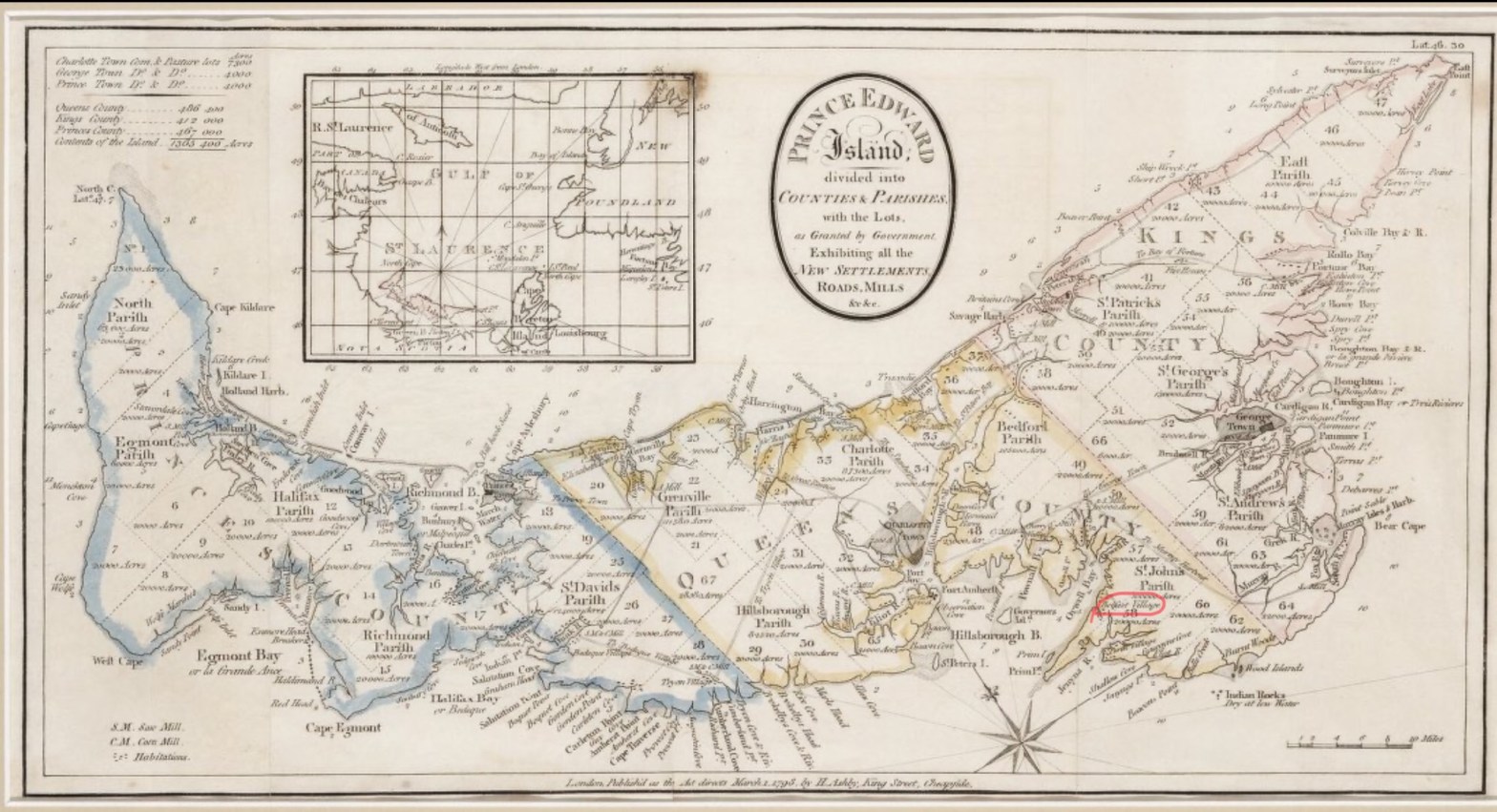
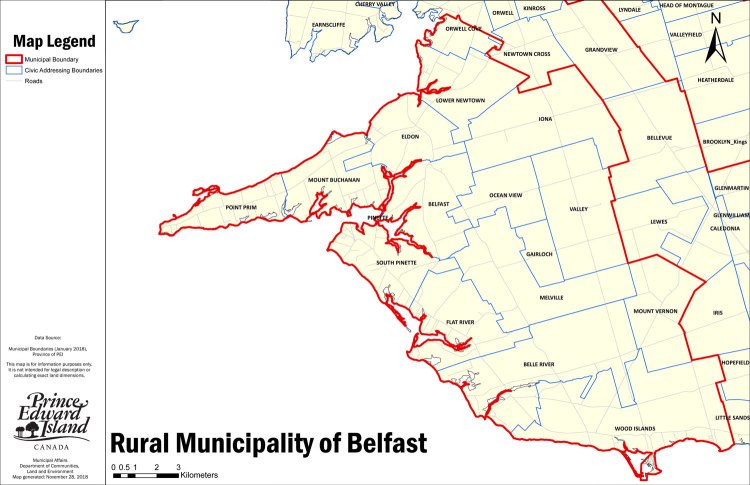
Because the forecast for the morrow was unpleasantly cold, I then set out to find Belfast. Although originally a village, as can be seen in the two accompanying maps, Belfast is now a district, comprising several townlands, I think they would be called in N Ireland ; and the similarities do not end there, as I was to find out.

A blustery 30 minute ride took me to a cross roads, and Google directed me faithfully to St Michael’s Church
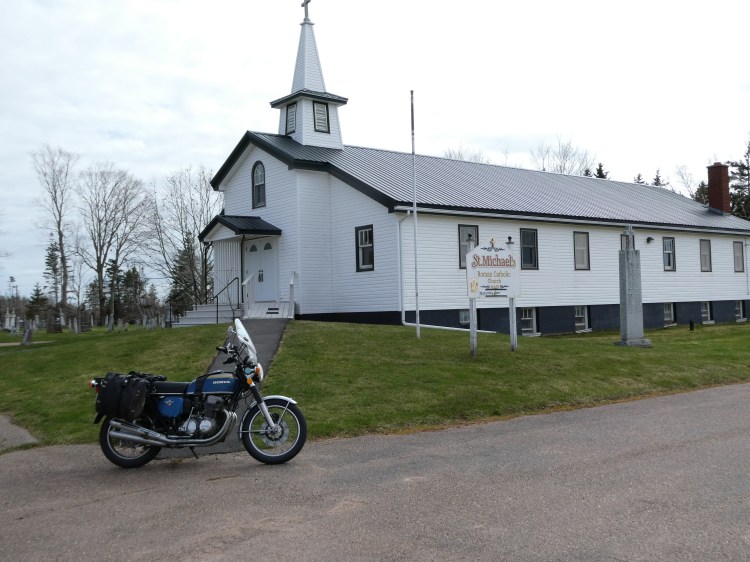

St. Michael’s Roman Catholic Church in Iona, Prince Edward Island first opened for worship in 1852. It burned to the ground on New Year’s Day in 1926 and was rebuilt the same year. The second church also burned in January 1959 before the interior was completely finished. The current church was built in that same year.
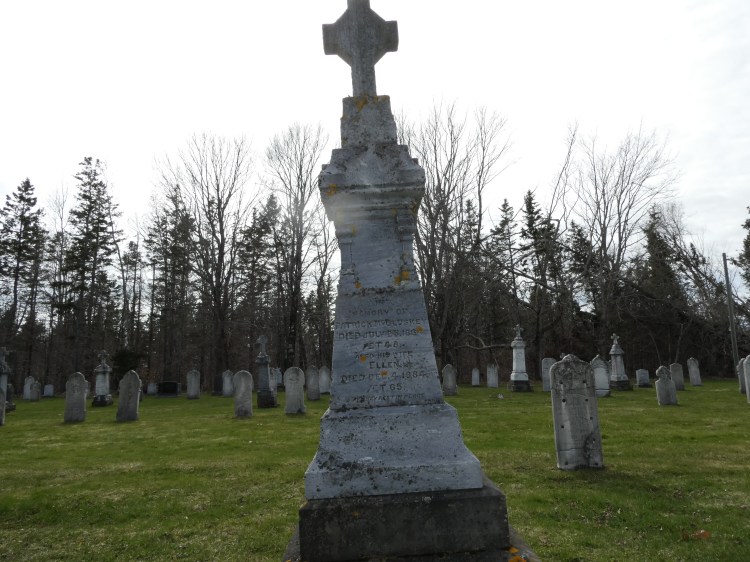
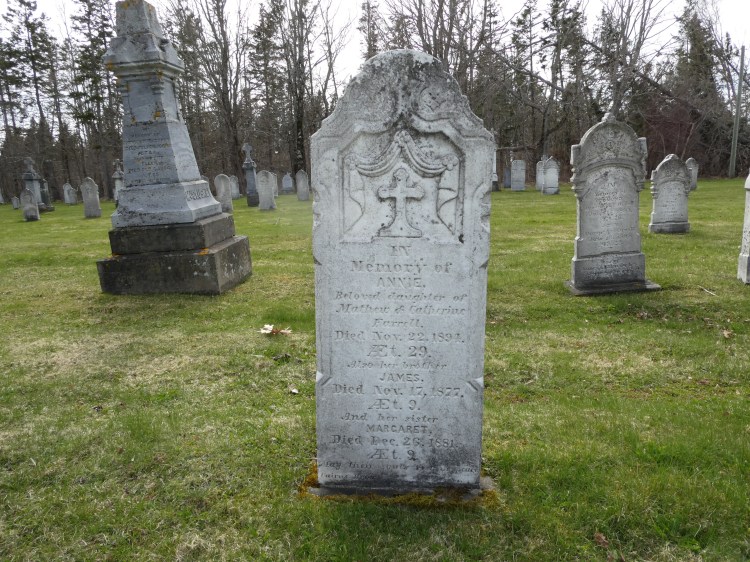
The next point of interest was St John’s Presbyterian Church, which I struggled a bit to find. In the process, I met and chatted to one Clayton McKenna, a man in his 70’s who looked somewhat older. He regaled me with stories from his younger days in the District and in particular a notorious local family, the McCloskeys – Patrick McCloskey’s is one of the headstones shown above – in which there were seven brothers who, in their youth, terrorised the area with their physical size and pugnacious approach to life. They were a poor family, and the boys, would roam the district and drop in on a neighbour, sit down and bang the table demanding to be fed; the neighbour, if he/she was wise would comply. One of the brothers went to the US and became an East Coast heavyweight boxing champ.
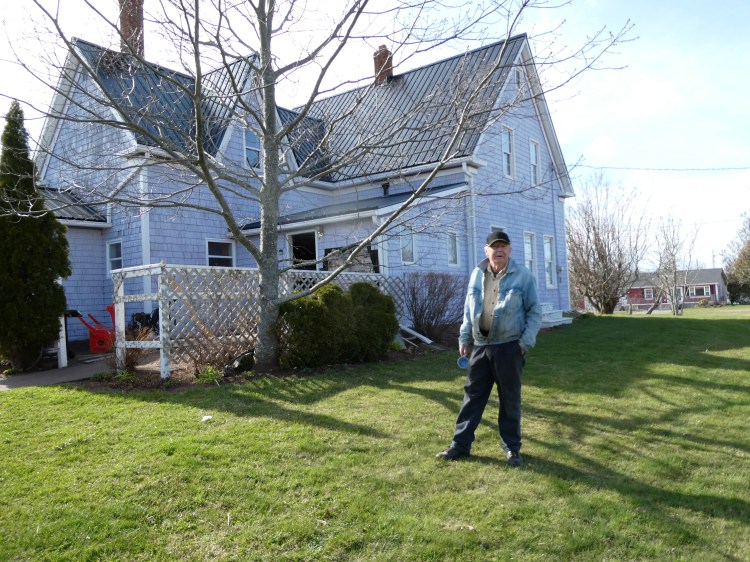
Clayton related one particular story of his returning home from sea, and after a night on the town he decided to wind up his neighbours by driving repeatedly around the house in his truck. Next morning, the enraged brothers, knowing full well who the culprit was, insisted that a neighbour call the police. When the Constable finally arrived, he was berated for taking so long to respond. Having listened patiently to the story, he asked for the identity of the guilty party. “I’m not telling ye that,” announced McCloskey, “That’s your job, to find out!” He never did find out, and McKenna went unpunished.
Confirming their claim to be natives, I found headstones in the church graveyard belonging to both families, dating from 1860 in the McKenna case and 1864 in McCloskey’s.
St John’s Presbyterian Church was established in a log structure in 1804, a year after the first Scottish settlers landed. In 1824/25, it was rebuilt after the style of Sir Christopher Wren; a bell was added in 1830, and a spire in 1860, resulting in the current 4-stage bell tower/spire.
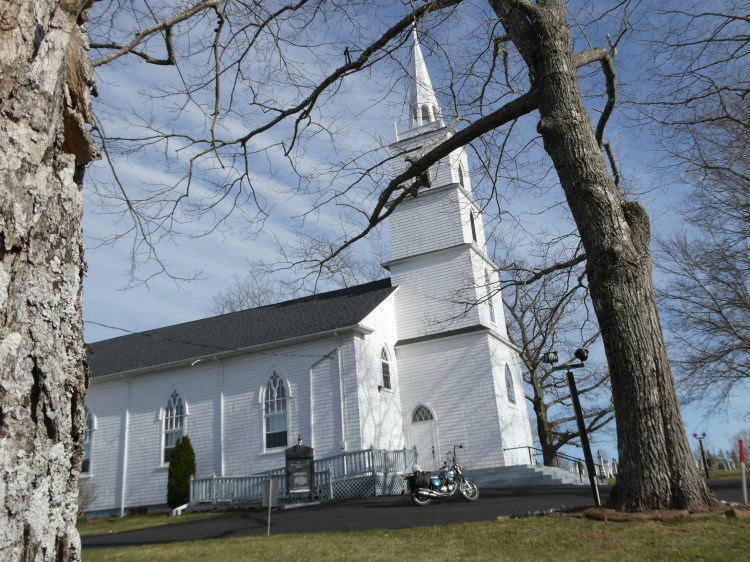

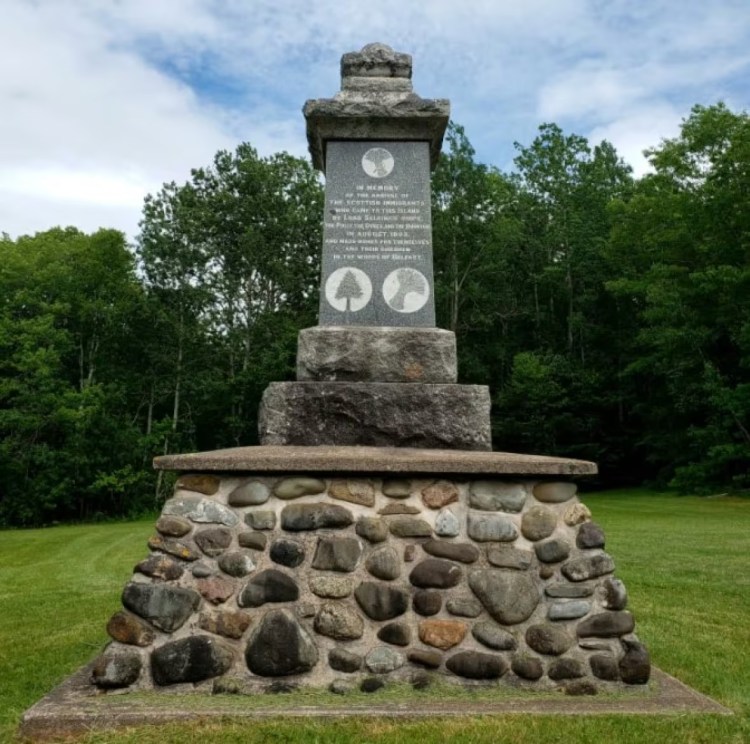
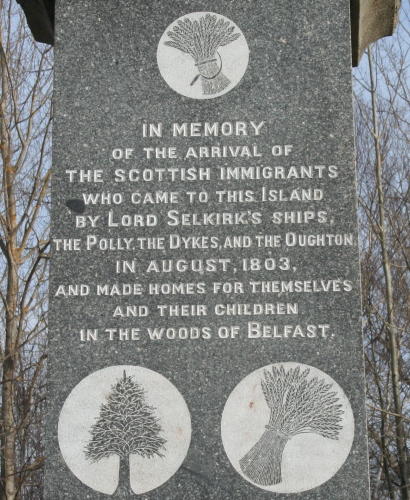
These fine churches were all well and good, but for me the big question was, “How did Belfast get its name?”
All the documents I had found, and the monument pictures above, started with the arrival of, what have become known as, Lord Selkirk’s Scottish settlers. The puzzling part was that in 1803 they landed at Belfast Cove, meaning the place was already called Belfast. This fact was repeated in everything I read; maybe the authors were using the name in a retrospective manner so as to make it easier for contemporary readers to understand the story and locate the site.
The answer to that would have to wait till the morrow. I had made contact with Barry through the SOHC4.net forum; Barry lives at Murray Harbour and had invited me to visit him. I finally made contact whilst at St John’s but decided that it was too late to go that day, and postponed my visit, also till the morrow.
 Belfast-2-Belfast-By-Bike